Alsace and the Vosges Mountains
Alsace and the Vosges Mountains
Stretching between the forested slopes of the Vosges Mountains and the fertile plains of the Rhine, Alsace is one of France’s most beautiful and distinctive cycling regions. Combining quiet country roads, picturesque vineyards, colourful medieval villages and spectacular mountain scenery, this tour showcases the very best that the region has to offer.
Over six unforgettable days of riding, we journey north through the heart of Alsace, discovering charming market towns, flower-filled villages and rolling vineyards connected by an extensive network of quiet roads and cycle paths. Along the way we also venture into the magnificent Vosges Mountains, where rewarding climbs lead to panoramic viewpoints and exhilarating descents through ancient forests.
Beginning in the historic town of Obernai, we ride south through the vineyards towards the fairy-tale villages of Riquewihr and Kaysersberg before continuing to the beautiful city of Colmar. The final stage follows the tranquil canals and cycle paths north to Strasbourg, one of Europe’s most attractive and historic cities.
Throughout the week you’ll experience the famous Alsatian hospitality, sample wonderful regional cuisine and ride through villages that seem almost unchanged for centuries, with colourful half-timbered houses, flower-filled balconies and bustling market squares.
Designed for experienced cyclists looking for a rewarding but varied holiday, this Grade 7 tour combines enjoyable mountain riding with beautiful scenery, fascinating history and some of the finest food and wine France has to offer.
Highlights
– Ride through the heart of the famous Alsace Wine Route.
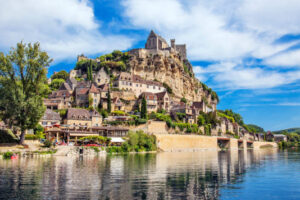
– Discover some of France’s most beautiful villages, including Riquewihr, Kaysersberg and Eguisheim.
– Cycle quiet roads through the spectacular Vosges Mountains.
– Visit the impressive Château du Haut-Kœnigsbourg.
– Stay in the beautiful towns of Obernai, Riquewihr, Colmar and Strasbourg.
– Enjoy excellent French cuisine and world-famous Alsatian wines.
– Ride a mixture of scenic mountain roads and superb traffic-free cycle paths.
– Finish with a relaxing ride along the canals into the magnificent city of Strasbourg.
– Full support from the experienced Peak Tours team.
– Comfortable hotels and luggage transfers throughout.
Duration 7 nights / 6 days cycling
Total distance 331 miles / 532km
Total elevation 29,000ft / 8800m
Grade 7
Practicalities
The tour begins in Obernai. The closest airport is Strasbourg however Basel airport has many more flights so we will meet you at Basel airport when you arrive and we will transport you to Obernai at the start of the tour. The transfer bus will leave Basel airport at 16.00. At the end of the tour we will transport you back to Basel airport for 9.45. If you want to go to Strasbourg at the start of the tour then there are good rail links and also Strasbourg airport so we can also arrange transfers from here as well.
Please see the Itinerary page for a more detailed description of the route and the Additional Information page for more information on the logistics.
You can download the trip notes for the tour here: Yorkshire Dales Classic Climbs Trip Notes
To see some photos from the recce that we did in June 2026 please click here June 2026 recce Photos
2027 Dates:
Fri 18th – Fri 25th June 2027 Places available
Fri 25th June– Fri 2nd July 2027 Places available
Fri 2nd July– Fri 9th July 2027 Places available
Fri 9th July– Fri 16th August 2027 Places available
Prices for 2027 are £1795 for shared twin or double, £2195 for a single and £2295 for sole occ of a double.
View the booking conditions hereThe Alsace Wine Route & Vosges Mountains tour is designed for cyclists who enjoy varied riding in beautiful surroundings. Although this is not as mountainous as our Alps or Dolomites tours, several days include rewarding climbs into the Vosges Mountains, making this a satisfying challenge for regular cyclists.
Daily rides range from approximately 50 to 64 miles (80–103 km), with climbing between 1,300 and 1,830 metres on the hillier days. The final ride into Strasbourg is almost entirely flat, providing a relaxed and enjoyable conclusion to the week.
Our Grade 7 rating reflects the combination of moderate daily distances and sustained climbing. Riders are free to climb at their own pace, while our experienced support team are always close by if assistance is needed.
This holiday is ideal for cyclists who enjoy combining rewarding riding with beautiful scenery, historic towns and excellent food, making it one of the most varied tours in the Peak Tours collection.
Friday: Arrival Day Non-riding day
Arrive at your hotel in Obernai ready for the first evening meal at a traditional Alsatian restuarant. Transport is provided from Basel-Mulhouse airport (French side) and can be arranged from Strasbourg if required.
Saturday: Obernai Loop Distance: 50 Miles (80km) Elevation: 4,000ft (1,300m)
Your first day offers the perfect introduction to the varied landscapes of Alsace.
Leaving the attractive market town of Obernai, we soon head west into the wooded foothills of the Vosges Mountains. Quiet roads wind through charming villages such as Ottrott before climbing steadily towards Le Hohwald, where spectacular views open across the surrounding forests and valleys.
The route continues south through peaceful mountain villages before descending towards the famous vineyards that line the Alsace Wine Route. From here we enjoy delightful riding through the beautiful wine villages of Dambach-la-Ville, Itterswiller and Barr, following quiet country roads and traffic-free cycle paths back to Obernai.
It’s a wonderfully varied opening day that introduces both the mountains and vineyards that define this remarkable region.
Sunday: Obernai to Riquewihr Distance: 55 Miles (88km) Elevation: 6,000ft (1,830m)
Today we leave Obernai behind and head deeper into the beautiful Alsace countryside, combining rewarding climbs through the Vosges Mountains with some of the region’s most picturesque villages.
Our route climbs gently through Klingenthal before entering the forests of the Vosges, where quiet mountain roads wind through peaceful woodland and traditional Alsatian villages. The scenery continually changes as we cross the hills before descending towards the attractive town of Villé and continuing south through the wooded valleys towards Lièpvre.
As we emerge from the mountains, the landscape opens into rolling vineyards and some of the most celebrated wine-producing villages in France. Passing through the charming village of Bergheim, we join peaceful cycle paths that lead us to our destination, the beautiful medieval village of Riquewihr.
Often described as one of the prettiest villages in France, Riquewihr is famous for its colourful half-timbered houses, cobbled streets and surrounding vineyards. It’s the perfect place to relax after today’s ride and soak up the unique atmosphere of Alsace.
Monday: Riquewihr Loop Distance: 48 Miles (77km) Elevation: 5,500ft (1,670m)
Today’s circular ride showcases some of the very best scenery and history that Alsace has to offer.
Leaving Riquewihr, we follow quiet roads north to the bustling wine town of Ribeauvillé before beginning the steady climb into the forests of the Vosges Mountains. One of today’s highlights is the spectacular Château du Haut-Kœnigsbourg, one of France’s finest medieval castles, dramatically perched high above the surrounding vineyards with magnificent panoramic views across the Rhine Valley.
From the castle we descend towards Lièpvre before continuing through peaceful valleys and traditional mountain villages, gradually climbing once again towards Aubure, the highest village in Alsace.
A rewarding descent brings us to the delightful town of Kaysersberg, with its flower-filled streets, historic bridge and beautifully preserved medieval centre. After time to explore or enjoy a coffee, we continue through vineyards and quiet country lanes before returning to Riquewihr for a second evening in this enchanting village.
Tuesday: Riquewihr to Colmar Distance: 50 Miles (80km) Elevation: 5,140ft (1,560m)
Another memorable day awaits as we continue south through the heart of the Alsace Wine Route towards the beautiful city of Colmar.
Leaving Riquewihr, we ride through Kientzheim before once again passing the charming town of Kaysersberg. From here the route heads west into the peaceful Munster Valley, where the roads begin to climb into the rolling foothills of the Vosges.
The forests, open meadows and quiet mountain roads provide a wonderful contrast to the vineyards below, before we descend through the famous cheese-producing town of Munster.
Our final miles take us through the postcard-perfect village of Eguisheim, consistently ranked amongst France’s most beautiful villages, before following quiet roads into nearby Colmar.
Known as the capital of Alsatian wine, Colmar is one of the region’s true gems. Its colourful half-timbered buildings, flower-lined canals and lively cafés make it an ideal place to spend the next two nights.
Wednesday: Colmar Loop Distance: 64 Miles (100km) Elevation: 7,400ft (1,700m)
Today’s ride is the queen stage of the tour, taking us deep into the magnificent Vosges Mountains on one of the most rewarding rides of the week.
Leaving Colmar, we gradually climb through vineyards before reaching the peaceful mountain roads that characterise this beautiful region. Passing through Trois-Épis, we continue into the forests where the scenery becomes increasingly dramatic as we traverse the high ridges of the Vosges.
Long climbs are rewarded with sweeping views across the mountains and, on clear days, as far as the Black Forest beyond the Rhine Valley. Quiet roads, fresh mountain air and exhilarating descents make this a day to savour.
Our return route follows the beautiful upper Munster Valley through the traditional mountain villages of Metzeral and Luttenbach-près-Munster before quiet country lanes lead us gently back into Colmar.
This is a challenging but immensely satisfying day that perfectly showcases the natural beauty of the Vosges Mountains.
Thursday: Colmar to Strasbourg Distance: 64 Miles (100km) Elevation: 960ft (290m)
After several days of rewarding climbing, today’s ride provides a wonderfully relaxed finale as we make our way north towards the magnificent city of Strasbourg.
Leaving Colmar, we follow a network of quiet country roads and dedicated cycle paths through the fertile plains of Alsace, passing a succession of attractive villages including Jebsheim, Grussenheim, Ohnenheim and Mussig. The almost level terrain allows plenty of opportunity to enjoy the surrounding countryside and reflect on the week’s adventures.
As we approach Obernai, familiar roads bring us full circle before we join the peaceful canal towpath for the final kilometres into Strasbourg. Free from traffic, this superb cycle route offers a fitting conclusion to the tour as we glide effortlessly into one of Europe’s most beautiful cities.
With its magnificent cathedral, charming canals, timber-framed houses and vibrant café culture, Strasbourg provides the perfect setting to celebrate the end of an unforgettable week of cycling through Alsace.
Friday: Transfer to Basel airport and tour ends
Following breakfast, our return coach departs Strasbourg at 8:00 am, arriving at Basel Airport at approximately 9:45 am. We recommend booking return flights departing no earlier than 11:45 to allow sufficient time for the transfer and airport check-in. As always, our team will be on hand to assist with bike packing and luggage before your journey home.
What’s Included?
The tour price includes 7 nights accommodation, 7 breakfasts, 6 lunches, snacks throughout the day, full trip support including a tour leader that cycles at the back of the group, two back up vans with spare parts and a few spare bikes.
We will even take your bikes over to France for you and bring them back at the end of the tour (there is a £60 charge for this, and you would need to get your bike to us in Derbyshire or meet us at one of the pick-up points en-route as the guides travel down to the ferry on the Thursday before the tour starts.) Alternatively, you can post your bike to us and we will take it over for you.
We provide GPX files, detailed route notes so that you can cycle at your own pace, a Peak Tours cycle shirt, certificate, luggage transfer each day, lots of fun!
What’s not included?
Evening meals, cycle hire (available for a fee), Garmin hire (available for a fee), transport to and from France.
What happens at the start of the tour?
The tour starts in Obernai on the first Friday, arrival day. We have a group meal on Friday night and then the cycling starts on Saturday. If you are arriving into Basel airport, we will transfer you to Obernai on a coach that leaves at 16.00. If you are arriving to Strassbourg airport or train station then please let us know and we will arrange a transfer to Obernai for you. on Saturday.
What happens at the end? (and bike transport information)
The end of the tour finishes in Strasbourg on the Thursday and we will have a celebratory last night meal and no doubt a few drinks as well! We will take our group photos then the guides will be scurrying around organising, while you take your time and get ready for the evening. We will meet for the final group meal at about 19.30, which will be followed by group conga (optional!)
A coach will arrive in Strasbourg on Friday morning to transfer you back to Basel airport. We aim to be at Basel airport by 9.45 a.m, so you should book your flights with this timing in mind.
One of the guides will drive a van with all your bikes in back to England and you can either meet them on Saturday as they are driving north, or pick up your bike from us in Glossop at some point.
If we take your bike for you then we would also need to bring it back. We can’t take bikes one way unfortunately. This is due to the post Brexit paperwork that needs to be completed. Please note that Peak Tours will not be held responsible for any damage caused in the transportation of the bikes, problems are very rare indeed and we have a very safe, tried and tested system. Any bikes with electronic gears need to bring their chargers with them for the trip and riders also need to be aware that it may be necessary to remove the saddle and in some cases with Di2 gears, unplug the cable (although we try to avoid this). We also remove the front wheel of most bikes being transported and place them in wheel bags, if anyone has a wheel that requires a specific tool you would need to provide that too please.
If you are flying with your bike then you will need to box your bike or put it in a bike bag before you board the plane. If you choose to do this then please be aware that there is only room in the vans for a limited number of soft cases that will fold down. Hard cases are not generally taken as they take up too much room but we have made exceptions for people in the past in mitigating circumstances. If you use a cardboard box for your bike we can easily fold that down and lay it flat on the floor of the van.
If you would like us to post the bike back for you after the trip to your home address the way it works is that the bikes will be boxed (this usually means that they will remove the front wheel, pedals, saddle & turn the handlebars) and posted to your address. The price for this service is available on request. If you would like to use this service please let us know and we will book it in for you.
Route
This route is quite challenging with a number of hills each day. The tour is harder than our Provence tour but not as hard as our Alps or Dolomites tours. On average, you cycle about 50 or 64 miles each day with between 1300 – 1830m climbing each day.
You may also wish to have a rest day from the bike and sightsee where you are staying. We stay in the same hotel for two nights in Obernai, Riquewihr and Colmar so if you didn’t want to cycle on those days then you can take it easy.
How difficult is the tour?
The Alsace tour is graded at 7. This tour is suitable for someone with a rgood level of fitness and who wants a challenge. The fitter you are and the more training that you do beforehand will add to the enjoyment of your holiday. The tour is slightly easier than some of our tours, as there are options for rest days. Take a look at the Itinerary section, and if you need any advice about fitness, please contact us and we will be happy to discuss any questions and concerns that you may have.
Why France?
France is a wide and diverse country which contains a variety of different and changing landscapes. France is also much less densely populated as the UK and much more rural so the roads are quieter and cyclists are treated with much more respect.
France is the cultural home of cycling and everyone has heard of the Tour de France. We will cycle through some of the landscapes that you will have seen whilst watching the tour.
France usually enjoys much better weather than the UK, so chances of a dry and sunny tour is much more likely than if tackling LEJOG. However, it must also be noted that it can get very hot in the summer months.
France is also well known for its gastronomy and also fine wines, and we will do our best to ensure that you sample plenty of the delights on offer. Added to that, a rich culture, medieval villages and stunning architecture all make France an ideal place for a cycle tour.
View the booking conditions hereSUPPORT
Usually each tour has 3 guides*:
- One guide drives a van that provides refreshments during the day. We call this van the ‘brew van’. Generally we have a mid morning stop, a lunch stop and an afternoon brew stop. The brew van provides hot drinks such as tea and coffee, water and a range of snacks such as fruit, dried fruit, biscuits, local specialities etc.
- One guide drives the ‘luggage van’ - transporting your luggage from hotel to hotel, as well as setting up your lunches on picnic days. We aim to put your bags in your rooms for you each day although this isn’t always possible.
- One guide cycles at the back of the group. You are provided with detailed route notes and gpx files so that you can navigate yourself. It is important that you cycle at your own pace - we don’t cycle as one big group. There could be an hour or two between the front and the back rider. Our cycling guide will always stay at the back of the group.
- Mechanical support: We carry a range of spare parts so that repairs can be made en-route and we will have some spare bikes available in the event that your bike has a serious breakdown. If we can’t fix your bike then we will try to get it to the nearest bike shop for repair.
- Each guide will be contactable by phone during the day so if you have any issues you can get straight in touch with them.
*For smaller groups you might only have one guide that cycles with the group and one back up driver or two back up drivers without a guide cycling at the back of the group. For groups of 10 or less just one tour leader will provide back-up for you.
FAQ: Does the support vehicle follow the group?
No, the back up van doesn’t drive behind the group at all times but the van shouldn’t be too far away if you require assistance. On most tours we have two back up vans. The brew van stays out with the group throughout the day, stopping for a morning refreshment stop, lunch and on most days an afternoon refreshment stop as well. Usually the luggage van will go on ahead to ensure that your luggage is ready for you when you arrive at your accommodation.
FAQ: Can I get in the van if I am tired and unable to complete the day’s riding?
Ideally you would complete each day's ride however you can get in the van as a last resort if you are unable to complete that day’s ride. We ask that riders who sign up for the tour are able to complete each day of riding, and don’t see the vans as a ‘strategy’ for completing the tour - e.g. if you are considering signing up for the tour and riding half of each day, and then getting in the van, then perhaps the tour is not quite for you yet, but once you’re confident that you can complete each day on your bike we will gladly welcome you.
If you have a contagious illness and can’t ride on any particular day then getting in the van isn’t an option as the chances of passing the illness to the guide driving the van is high. This has happened on many occasions in the past and then the guide has passed the condition to others in the group. It is for this reason that we don’t allow anyone with a contagious condition to ride in the van with the guide. If this happens then we will help arrange alternative transport to the next stop.
FAQ: Can my non cycling friend/partner book onto the tour and ride in the van each day?
No. We may need the space in the van to pick up riders who have had an accident or need mechanical assistance so we need to keep the space in the van free for emergencies.
FAQ: What are the groups like?
Obviously each group is different but generally they are a fun, friendly, helpful and adventurous bunch. There will be people of all ages and from all walks of life. We tend to get quite a few older riders although there will always be a few younger riders as well. The average age for our riders is people in their 50’s and 60’s. We think that a group of 20-25 is ideal as there will be plenty of people with similar interests and character without being such a big group that it becomes too much. Generally the group will be split 50/50 between people travelling alone and people that travel as a pair such as two sisters, two friends, two partners etc. There will be plenty of people to socialise with throughout the day and in the evening.
ACCOMMODATION
B&B OPTION & DOUBLE OR TWIN/TRIPLE
If you choose the B&B only option you will stay in a mixture of B&B's, guesthouses and hotels. If you are travelling with a friend then you will be roomed together in a twin or if you're with your partner then you will be in a double room (or a twin if you prefer). If you are travelling alone then you will be roomed with another member of the group in a twin or triple room (same sex). The actual stopovers may change from the advertised accommodation providers, if this happens then an equivalent standard of accommodation will be used nearby. The majority of the rooms you stay in will be en-suite however you may stay in a couple of rooms that are not en-suite, although this is rare for the double/twin room option.
SINGLE ROOM OPTION
If you choose the single room option, you will have your own room for the duration of the holiday. This will be in either a single room or single occupancy of a double room. Usually rooms are en-suite however there maybe the occasional room that is not en-suite.
SOLE USE OF A DOUBLE ROOM OPTION
If you choose this option, you will have a guaranteed double room to yourself throughout the tour. You will always have an en-suite each night of your holiday. Occasionally you may have a twin room to yourself if a double room isn't available but again, this is rare.
YHA (YOUTH HOSTEL) OPTION
This option is only available for the fourteen day 14 Day LEJOG tour. If you choose the YHA option you will stay in a mixture of hostels, hotels & B&B's staying in dormitory rooms, single rooms, twin rooms & triples.
FAQ: What happens if I’ve booked a twin room option but decide that I want a single during the tour?
We will try to find another room for you each night however any additional room costs would need to be paid for by you. It may be that some accommodation providers don’t have any extra rooms available, in which case you would need to stay in a twin room.
FAQ: What can I expect the quality of my accommodation to be like?
Most of our accommodations are either 3 or 4 star which we have hand picked because of their location, high quality facilities and great service standards. You will experience a variety of accommodations throughout the regions you’re passing through each one being different to the next. Where possible we try to steer away from large corporate hotels and lean towards local family run businesses to provide a more authentic experience. Occasionally, in rural areas, the infrastructure isn’t as developed as in other areas so there isn’t an abundance of accommodations that are able to host a large group of cyclists with bicycles. On these rare occasions the group has to be split between two neighbouring villages.
FOOD
All of your breakfasts and lunches, unless otherwise specified in specific tour information, are included in the price of the trip. Lunch will be provided each day in a café or restaurant or picnic lunches provided by the guides. Evening meals can be bought at your accommodation or in a nearby restaurant. We also have tea, coffee, fruit, biscuits, cake, nuts etc in the back up van that you are welcome to fill your pockets with at the morning and afternoon ‘brew stops’. We don’t provide gels or powders – only real food.
FAQ: What if I have any dietary requirements such as being Vegetarian or Vegan, Gluten or Dairy Free?
Usually on each tour we have people with specific dietary requirements, and we are able to accommodate these without a problem. Sometimes in the more rural areas our tours visit there may not necessarily be as wide a variety of food (e.g. for Vegans in France or Portugal) but we always inform each café or restaurant well in advance.
FAQ: WHAT HAPPENS IN THE EVENINGS?
Once you have arrived at your accommodation you should have chance for some time to relax, have a shower etc before the evening meal. We will often arrange somewhere to eat for the evening meal so that we can all get together and you won’t be left alone if you would like to eat with others. We don’t arrange a group meal every night to allow for flexibility and exploration but there will always be somewhere at your hotel or close to your accommodation for you to have an evening meal.
Other Costs
We often get asked about estimations for spending money for your evening meals over the length of the tour to help people budget. This is sort of a ‘how long is a piece of string’ question, as some will eat and drink much more than others, but as a rough guide we would recommend budgeting around £30 / €35.00 per day per person for a 2-3 course evening meal plus a drink and, knowing yourself what you are likely to eat and drink, you can adapt that accordingly.
BIKES
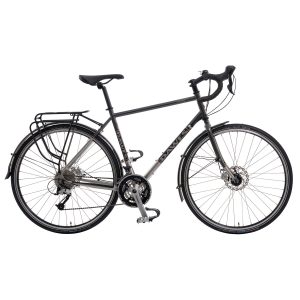
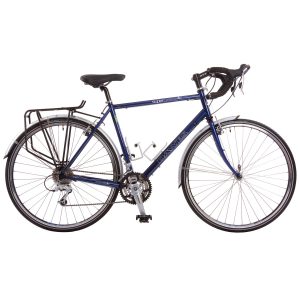
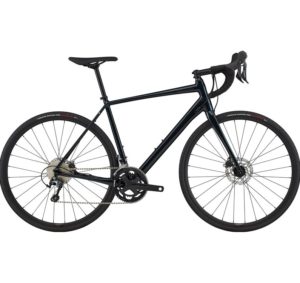
Our tours are generally designed for the use of hybrid/road bikes with most riding surfaces being that of smooth tarmac road. Occassionally there may be stretches where it's necessary to use cyclepaths that may be hard compacted gravel or similar, but these instances will be for a very short stretch usually to avoid an unsafe alternative route.
UK TOURS:
You can transport your bike in the following ways:
- bringing your own - most people using this option will take a train or have a friend or relative drive them to wherever the tour starts. For some tours we may be able to offer some en-route collections before the tour. This will usually be at a motorway service station along the route between our HQ in Glossop, Derbyshire and the start point of the tour.
- those arriving into the UK from overseas with their own bike generally tend to transport their bike in a bike bag / box. We have a limited number of spaces in the vans to store such bike boxes / bags during the tour so please contact us if you are thinking of bringing your own bike.
EUROPEAN TOURS:
You can transport your bike in the following ways:
- bringing your own - most people using this option will take a train or plane, with their bike in a bike box or bag. We have a limited number of spaces in the vans to store such bike boxes / bags during the tour so please contact us if you are thinking of bringing your own bike.
- we can transport your bike for you, for a £60 charge. You can either get your bikes to us in Glossop in the Peak District, or you can meet our guides at a convenient location (usually a motorway services) for them while they are en route to catch the ferry.
Post-tour we can courier your bicycle back to you for a fee to cover handling, packaging and posting costs. We aim to return your bike to your chosen address (UK mainland only) within 7 - 10 business days. These times may differ throughout peak season, please contact us if you require your bike within a certain time frame prior to choosing this option. More information on this service can be found on our Cycle Service Centre web page.
It should be noted that bikes travel with us/our courier service do so at your own risk. It is very difficult for us to provide insurance for your bike during transit, so you need to insure your bike in the unlikely event that your bike is lost or stolen or damaged.
Please note - Generally this isn’t necessary, but for some of the larger bike frames we may need to lower/remove your seat posts in order to pack all the bikes into the vans. We take great care packing the bikes and we will mark seat posts with tape to ensure seat heights can be restored. We are aware that some of you will have Di2 battery systems in the seat posts. We can disconnect these carefully and reconnect them when we unpack the vans.
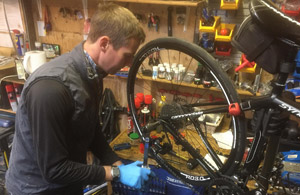
Please ensure that your bike is fully serviced and in good working order before the start of the trip. It is advisable to have your bike service a few weeks before the start of the tour. This will allow time to ‘bed in’ before you start your ride. Our Cycle Service Centre can offer this service for you both before and/or after the tour. Please see our Cycle Service Centre web page for more information and pricing.
Alternatively you can hire a bike from us, please see our website for more information.
FAQ: Can I use an electric bike on your tours?
E-bikes are welcome on all of our tours, please let us know if you are intending to ride an e-bike, and whether it has to be charged in-situ, or if the battery is detachable, so that we plan accordingly. Bicycles with retro-fitted/after-market electical conversions must be kitemarked and manufacturer approved to comply with current health and safety regulations.
FAQ: Where will my bike be stored overnight?
Our accommodations are sourced specifically based on the requirements of our tour and groups, part of these requirements is ensuring there is suitable secure storage for your bicycle throughout your stay. Most accommodations we use haven’t been designed to host a group of 25 cyclists in mind so the bike storage solution we arrange can differ from place to place. Usually there will be a room/garage/shed where the bikes can be stored securely and out of the elements. When travelling through rural areas, we use local B&Bs which are unlikely to have the ideal large indoor storage facilities we’d like. In such circumstances bicycles are stored outside under a tarpaulin secured with a cable lock(s) around the back of your accommodations or behind locked gates. If you’re considering booking a tour that travels through rural areas and wish to discuss this in more detail, please speak to one of our team members. Occasionally we keep bikes stored in our back up vans.
CLOTHING AND EQUIPMENT
A full kit list, including clothing and equipment (personal spares and repairs) can be downloaded here for our 10 - 14 day tours or here for our 7-9 day tours or here for our tours that are less than 7 days.
Helmets are a requirement on all of our tours.
LUGGAGE
The ideal size for luggage is 70 x 50 x 30 cm and a weight of 10 to 15kg (or less). You will also be able to have a smaller ‘day bag’ which you can access during the day.
Where possible, your luggage will be put into your room at the end of each day, but please note that if your luggage exceeds the 15kg limit then this may not be possible.
FAQ: Are there any places to wash clothes during the tours?
This varies from tour to tour, but there will be a note made in your route notes. Often the towns you will stay in will have a local launderette, or sometimes there are self-service washing machines at fuel stations or in supermarket car parks (this tends to be more common on our European tours.) Most people will tend to wash their own clothes during the tour using some travel wash gel or soap in their hotel bathroom - this can be done quite effectively meaning no need for a launderette.
FITNESS
Each of our tours has a grade. Our grading system is explained here
We offer two different training weekend options, which can be found here. If you are booked on to one of our longer tours then you may wish to do one of our shorter tours first, to get a feel for how things work. You can see details of our shorter tours here.
In addition to this we send out a training plan for each tour once you have booked on.
FAQ: What if I am very slow during each day?
We ask that each rider completes each day of riding by 18:30, to allow you to have enough time to rest, socialise and eat before heading to bed. This helps you to get maximum enjoyment out of the tour, rather than each evening becoming a rush! Whilst on tour, if you are coming in late then we will try to accommodate this by perhaps setting you off early. As per the booking conditions, if you finish your day's cycling beyond this time period, it shall be at the tour leader's absolute discretion as to whether you are at a sufficient level of fitness to continue with your chosen holiday.
MECHANICAL KNOWLEDGE
We don’t expect you to be an expert bike mechanic but there are a few simple skills that will be a great benefit to you. It is essential that you know how to fix a puncture. It is quite likely that at some point you will have a puncture or two so it is essential that you carry a puncture repair kit and a spare tube or two with you. It is also helpful if you know how to change your brake pads and adjust your brakes and gears, however this isn’t essential. Our guides will help you with any repairs and adjustments en-route.
FAQ: What if I can’t change a puncture?
We recommend that you practise this before coming on tour. There are a number of Youtube videos out there to help, and your local bike shop will be able to offer advice and show you in person. If you arrive at the tour and you still don’t know how to change a puncture, then our guides will show you at the beginning of the tour. Changing a puncture is a quick job: it should take at most 10 minutes, even if the tyres are tricky to get on and off. If you have to wait for one of our guides to assist you, then it is likely that you may be waiting longer than 10 minutes depending on where they are, so it makes sense for you to master this skill so you can get back on the road sooner rather than later.
NAVIGATION
We provide detailed route notes and also GPX files for all tours. If you would like to hire a Garmin Device from us, with all of the routes loaded, then we have them available for hire. These can be booked through the Tour Extras section of our website, or by getting in touch with the office.
FAQ: What if my own navigation device fails on tour?
We have a number of spare Garmins which we carry, with all of the routes loaded on. In the interests of fairness to other customers who have hired a Garmin, if you have to use one of ours then we would ask you to pay the same fee that they have paid (or contribute towards some costs depending on how many days you have had to use it for).
GROUP SIZE
Our tours operate with group sizes of a minimum of 8 and a maximum of 25 people. We don’t cycle as a large group, smaller groups naturally form along the way. We feel that this size of group works best as there will always be enough in the group for some good company but there won’t be so many people that it becomes overcrowded.
FAQ: What is the usual age and make up of your groups?
Typically most people are aged around 45 and above, and generally on each tour there is a split of around 40% women and 60% men. That does vary from tour to tour however, and we have had riders from ages 15 to 87!
FAQ: Can I come with my child who is under 18?
Yes, however you will be responsible for your child’s safety throughout the tour. Our guides do look after all of our riders but they will not act in loco parentis.
SAFETY
Emergencies112 is the emergency number for Europe. The number 112 can be dialled to reach emergency services - medical, fire and police - from anywhere in Europe. This Pan-European emergency number 112 can be called from any telephone (landline, pay phone or mobile cellular phone). Calls are free and you can ask for an English-speaking operator.
GHIC – European Health Insurance CardThis card entitles you to greatly reduced or free state medical services throughout Europe, including Switzerland. We recommend you send off for one of these before the trip and carry it with you. It’s important to bear in mind that these cards are not a substitute for travel insurance and adequate travel insurance is compulsory for this tour. This link will give you all the information you need about the EHIC - Apply for a GHIC Card.
Tick-borne encephalitisIn general, no special immunisations or medications are necessary for travel to Europe but it may be worth immunising yourself against ticks as, in many countries, in wooded areas and rough pasture with long grass, ticks can be found. The risk is very low but it is possible to contract Lyme disease, tularaemia, tick-borne encephalitis and rickettsia diseases from these little critters in the warmer months.
If you find a tick attached to skin, promptly remove it. Grasp the tick using fine-tipped tweezers as close to the skin as possible. Pull upward with steady, even pressure, do not twist or jerk the tick. After removing it, thoroughly disinfect the bite site and wash your hands. If you begin to experience a rash or fever within several weeks of removing a tick, see your health care provider.
Cycling Tips for mainland EuropeWe’ll start with the obvious one, cycling on the right-hand side of the road. You will be surprised at how many times you are cycling along thinking “somethings not quite right here” only to find a Renault heading in your general direction!
It takes time to break the lifelong habit of cycling on the left-hand side and it would be worthwhile keeping this ever present in your minds for at least the first few days.
Instinctively, at junctions and roundabouts, we Brits look for cars coming from the right. This habit must also be broken and great care taken at junctions and roundabouts to look for the cars coming from your left and giving way to the left at roundabouts.
Another tricky manoeuvre that is counter intuitive to the British brain is turning left. This is perhaps the most confusing as we are so used to simply turning left.
To turn left we must cycle past the first half of the junction and turn left into the second half while at the same time taking great care for oncoming traffic (there is usually a blue arrow sign to remind you).
By law, you need to have a bell on your bike in France, you can find small ones that don’t take up too much space.
INSURANCE
We strongly recommend that you take out adequate insurance for your tour which, as an absolute minimum, should cover accident & medical expenses if you are travelling within the UK or outside of the UK for our European tours, cover for your bike and belongings and cancellation cover in the event that you have to cancel your tour for unforeseen circumstances.
You should be aware that if you have an accident or fall ill while on the tour you will lose the money paid for the trip. A travel insurance policy would allow you to reclaim most of the money as well as providing insurance in case you lose your bags or if your bike is stolen, broken etc.
Your policy should also cover cancellation costs if you cancel the tour within 8 weeks of departure. If this happens we will try to fill your space and return your funds to you but if we are unable to fill your place you will lose the funds paid for the tour.
We’ve partnered with Yellow Jersey and agreed a 10% discount off their travel insurance products, both available on a short term or annual basis for all our clients. Once you have booked onto your tour with us, you will receive a discount code. We would recommend that you also take a look at what other products are available.
FAQ: What if I don’t have insurance for my tour?
Adequate travel insurance is a condition of your contract with us. You must be satisfied that your insurance fully covers all your personal requirements including pre-existing medical conditions, cancellation charges, medical expenses and repatriation in the event of accident or illness. If you choose to travel without adequate insurance cover, we will not be liable for any losses howsoever arising, in respect of which insurance cover would otherwise have been available.
For information on our Booking Conditions, please see here.
FAQ: What do I do if I lose my passport?
- Go to the police and get an incident report: You need to do this because The British Embassy (or Embassy of the country your passport is from) will not issue you with a new/replacement travel document without a police report and your travel insurance policy will not reimburse you for costs incurred without a police report.
- Go to the nearest British Embassy: Once you have filed a police report, head to the nearest British embassy to get the necessary paper work. This includes an LS01 form, which cancels your current passport and prevents crooks from using it for identity theft.
- Emergency Travel Documents: In the event of an emergency (like your flight home leaving that afternoon), travel documents can be issued for those who need to fly home immediately. For an emergency passport to be issued, you will still need some form of identification and a police report - for security reasons. This is not a replacement passport though - it will only be valid for your flight home.
- Check your travel insurance as some insurance providers cover situations like this so it is worth ringing them up to find out.